
Provolone Cheese: An Italian Classic in Two Distinct Flavors
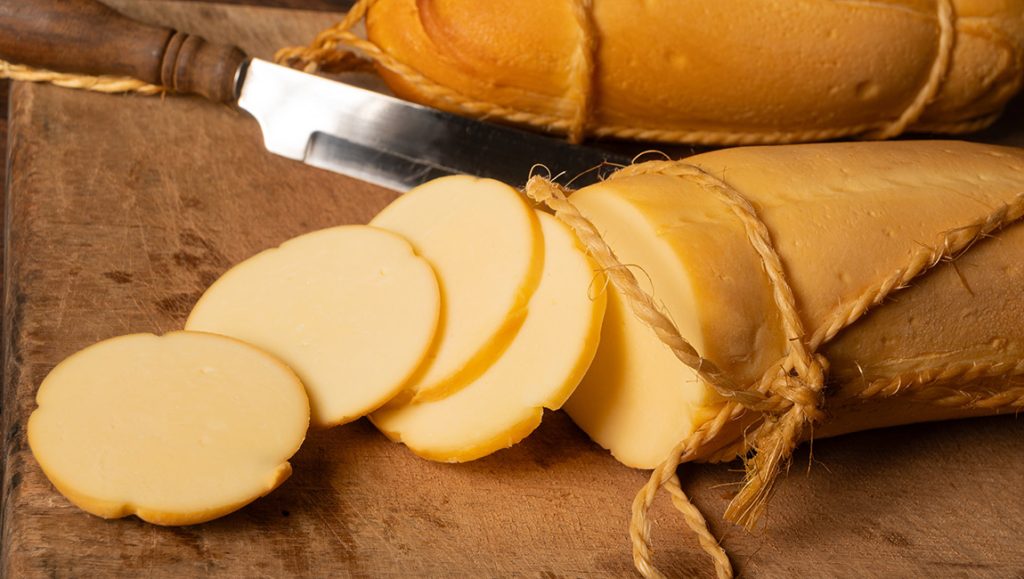
When you’re making dinner and want a cheese that melts beautifully yet keeps a real texture, the answer often lies in the Italian classics. Provolone is a semi-hard cow’s milk cheese traditionally shaped by hand in southern Italy. Its recognizable cylindrical shape makes it easy to cut into even slices for hot sandwiches or burgers, while the protected designation of origin guarantees an authentic production method.
The most interesting part is that, depending on how long it ages, Provolone comes in two completely different versions – the mild Dolce and the mature Piccante. Below we look at how they differ, how nutritious the cheese is, how to choose and store it, and we finish with a recipe for a hot beef sandwich.
What Provolone Is and Where It Comes From
Provolone belongs to the family of pasta filata (“stretched-curd”) cheeses, where the fresh curd is stretched and shaped by hand in hot water – the same technique used to make mozzarella. It originates from southern Italy and today is mostly produced in the north, where certain varieties carry a protected designation of origin that guarantees the traditional method.
You’ll recognize it by its large, cylindrical (or pear-like) shape, smooth rind and a firm yet elastic interior that slices neatly into rounds. What sets it apart is that a single name hides two characters: the younger, milder Dolce and the longer-aged, bolder Piccante. So it pays to know which one you’re choosing and for which occasion.
The name comes from the Italian word for “large ball” and it’s exactly that big, elongated shape that makes it easy to spot at the counter. Traditionally it’s tied with string and hung to dry, so the rind carries traces of that process. Thanks to its firm yet meltable structure, Provolone is one of the most versatile cheeses – equally good cold on a board and warm, melted into a dish.
Provolone Dolce – Mild and Creamy Notes
Provolone Dolce ages for two to three months, which gives it gentle, slightly sweet notes and a softer texture. That makes it extremely practical for warm pasta dishes like macaroni and cheese, since the heat quickly turns it into a creamy sauce that binds everything together.
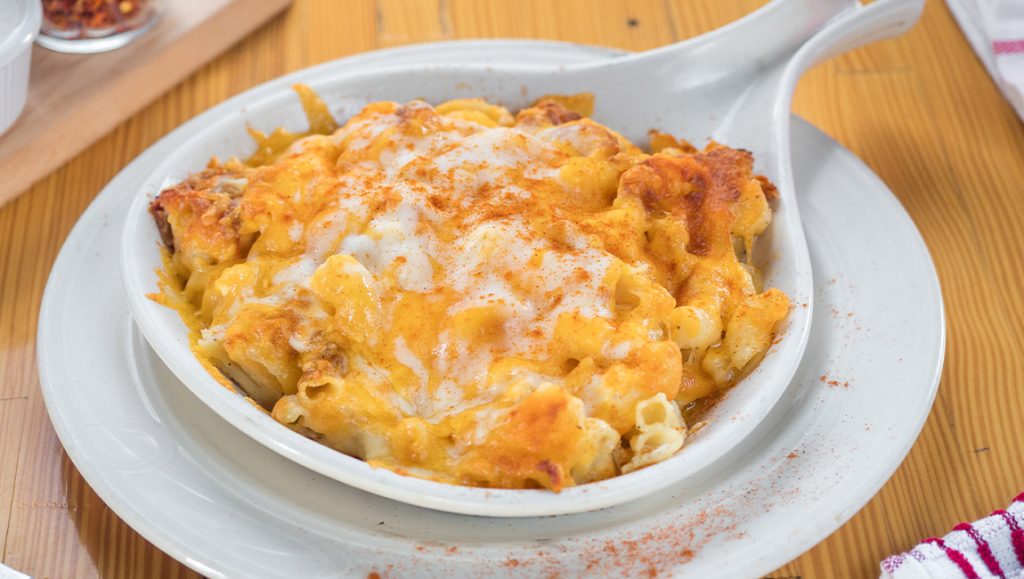
That’s exactly why it’s a favourite for anything that should be creamy and stretchy – from baked pasta and lasagna to a nacho cheese sauce. At home you can also use it as a filling for breaded cheese sticks or in a stuffed-pepper mix, where it forms a soft, melty layer as it bakes.
It also works wonderfully stirred into a vegetable omelet, and it does just as well on a serving board. For a light appetizer, serve it with pieces of pear, fresh grapes and a handful of walnuts or almonds to create a lovely contrast of salty and sweet. Thanks to its mild taste, Dolce is a great choice for children and for anyone who doesn’t like overly strong cheeses. Try it in a grilled-cheese sandwich or a panini, where it melts into a smooth, stretchy string, and in gratins in place of standard melting cheeses when you want a milder note.
Provolone Piccante – The Mature, Piquant Version
The more mature version, Provolone Piccante, rests for six months or more, developing a much more intense aroma and a mild, pleasant sharpness. Its firmer structure makes it an excellent companion for cured meats on a board, and equally rewarding in warm dishes.

You can grill it in a cast-iron skillet or bake it in a small ceramic dish in the oven with a pinch of oregano. Served warm and melted, with a fresh salsa of finely chopped peppers and onion and a glass of red wine, it becomes an appetizer reminiscent of the popular South American provoleta.
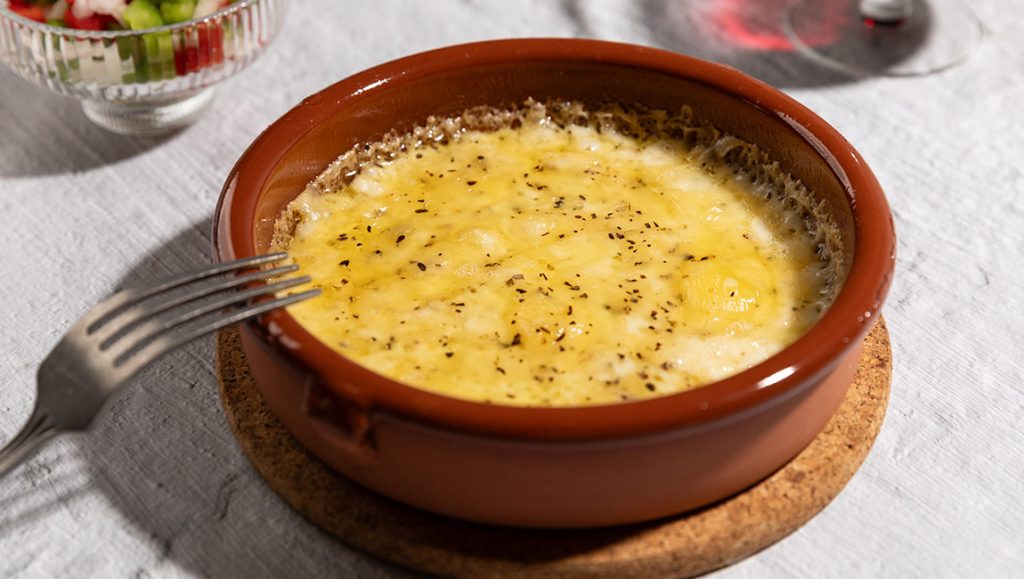
Because of its pronounced aroma, Piccante is a cheese that goes a long way in small amounts: just grate a little over pasta, risotto or roasted vegetables and the dish instantly gains depth of flavour.
What It Pairs Best With
Provolone is versatile and easily finds partners in both warm and cold combinations:
- Dolce + pear, grapes, walnuts – a light appetizer from the board
- Dolce + macaroni or pasta – a creamy melting sauce
- Dolce + eggs and vegetables – in an omelet or frittata
- Piccante + prosciutto and cured meats – on a charcuterie board
- Piccante + oregano, grilled or oven-baked – warm provoleta
- Piccante + red wine and pepper salsa – an evening appetizer
Little Secrets for Melting and Serving
A few small things help Provolone always show its best side:
- For melting, slice it thinly or grate it so it melts evenly.
- Add it near the end of cooking a warm dish so it stays creamy, not rubbery.
- For a board, take it out of the fridge early – the aroma is fuller at room temperature.
- Use Dolce when you want a mild, creamy result; Piccante for a bolder flavour.
- Grate leftovers and use them the next day over pasta or roasted vegetables.
Nutritional Value
As a full-fat cow’s milk cheese, Provolone is a concentrated source of quality protein and calcium, which is important for bones and teeth. A serving of about 28 grams has roughly 98 calories, around 7 grams of protein and a good amount of calcium, along with a certain amount of fat and salt.
As with all aged cheeses, it’s best enjoyed in moderation as part of a varied diet. Since the more mature Piccante has a stronger aroma, a smaller amount is enough to give a dish character, so it’s easy to keep portions in check.
- about 98 calories per 28 g
- around 7 g of quality protein
- calcium for bones and teeth
- stronger aroma in Piccante – a little goes a long way
How to Choose and Store Provolone
When buying, choose a piece with a smooth, intact rind and a compact cut surface, without cracked or dried edges. For hot sandwiches, quick pastas and meals with kids, go for Dolce; for boards with cured meats, grilling and bolder dishes, reach for Piccante.
Keep the cheese in the fridge, wrapped in cheese paper or parchment and then in a lidded container so it can breathe without drying out. Store it in a more humid part of the fridge and take it out about fifteen minutes before serving so the aroma can develop. If the surface dries a little, just scrape off a thin layer; a larger piece can also be frozen, in which case the thawed cheese is best used for melting and cooked dishes.
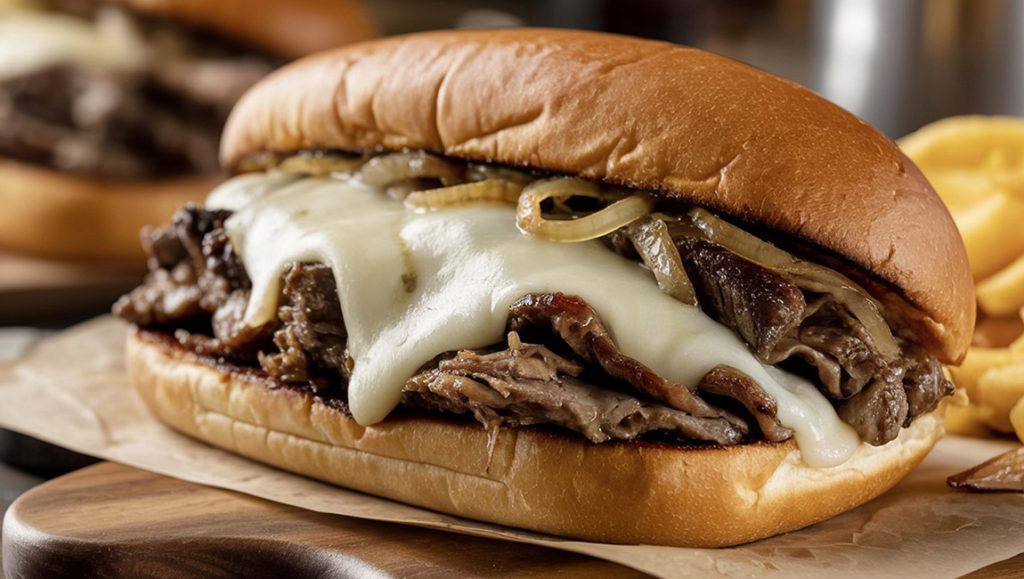
Mini Recipe: Hot Beef and Melted Cheese Sandwich
A quick, hearty and rich meal where Provolone Dolce shows off all its creaminess.
Ingredients:
- 1 long bread roll
- 150 g beef, thinly sliced
- 1 red onion
- 3 slices of Provolone cheese
- 1 tablespoon of olive oil
- salt and pepper
Method:
- Slice the onion into strips and sauté it in olive oil until softened.
- Add the thinly sliced beef, season with salt and pepper and cook for a few minutes, stirring occasionally.
- When the meat is done, gather it in the center of the pan with the onions, then lay the Provolone slices on top.
- Leave it on the heat for two minutes, until the cheese is fully melted.
- Cut the roll open, transfer the meat and melted cheese inside and serve immediately with fries.
So under a single name you get two different cheeses: with Dolce you easily handle quick hot sandwiches and creamy pastas, while you save Piccante for an evening spread with cured meats and a glass of wine. Look for Provolone on the shelves of our markets and choose the variety to suit the occasion.