

Chanterelles and Black Trumpets: How to Use Wild Mushrooms in the Kitchen
A little melted butter, a sprig of thyme and fresh wild mushrooms are enough to make the whole kitchen smell irresistible. Chanterelles and black trumpets bring distinct earthy and nutty aromas that pair beautifully with meat, pasta and sauces.
Since they quickly absorb liquid and soften easily, a few precise steps during preparation will keep them firm and juicy. Below we explain how to clean and prepare them, how to make the most of them, plus one reliable recipe and ideas for pairing.
Chanterelles: Mild Floral and Peppery Notes
Chanterelles stand out with their mild floral and subtly peppery notes. They turn out best if you briefly sauté them in a bit of butter – this way they keep their shape and juiciness, so you can add them to a cream sauce with chicken, stir them into your favourite pasta, or use them as a filling for shortcrust savoury pies.
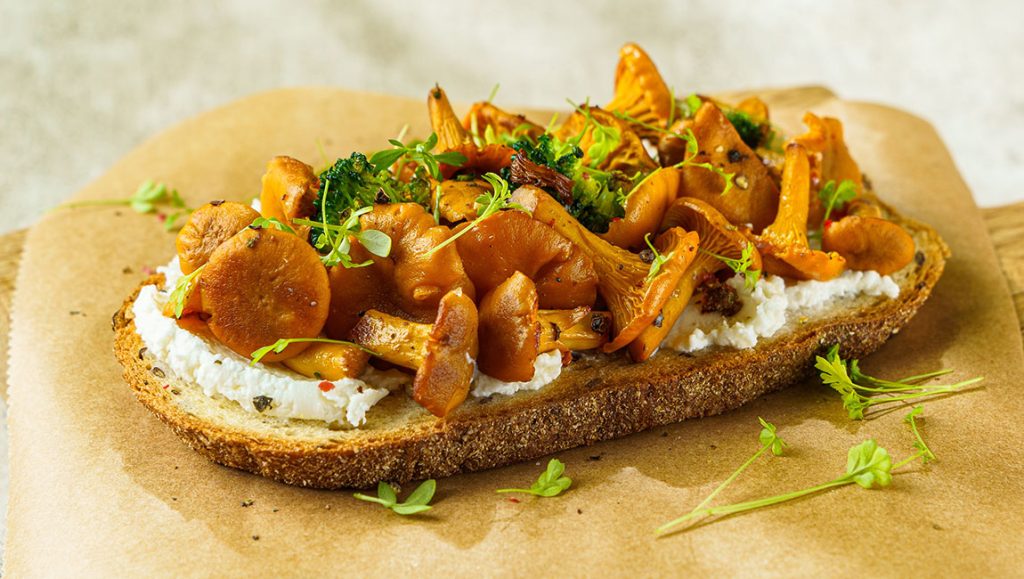
They pair perfectly with mild dairy cheeses, so they are wonderful on toasted bread with cream cheese and a few fresh herbs. They also make a delicious addition to morning scrambled eggs, and they go very nicely with roasted pork. Thanks to their mild taste, they don’t overpower the other ingredients but give the dish a fine, recognizable woodland aroma. You’ll recognize them by their golden-yellow to orange colour and funnel-like shape, and that very colour brightens up any plate.
How to Clean and Prepare Chanterelles
To keep their natural firmness in a dish, it is enough to briefly rinse chanterelles under cold running water and gently pat them dry with a paper towel. Even better, remove most of the dirt with a soft brush or cloth, since the mushrooms quickly soak up water and then fry less nicely. With chanterelles, pay attention to the ridges on the underside of the cap, where soil or sand tends to collect, and clean them carefully if needed.
When frying, make sure the pan is well heated and don’t overcrowd it – if you add too many at once, they start releasing water and simmer in their own juices instead of browning. So fry them in smaller batches over higher heat, and add salt only near the end so they don’t release liquid too soon. Halve or slice larger specimens lengthwise so they cook evenly, and leave the small ones whole since they look lovely in the finished dish.
Nutritional Value of Wild Mushrooms
Beyond simply being delicious, chanterelles provide a range of important nutrients such as vitamin D and B-group vitamins, copper and iron, making your diet more varied. Black trumpets, for their part, bring minerals such as potassium and iron.
Wild mushrooms are also low in calories and high in water, so they add fullness and aroma without weighing a dish down. As with all mushrooms, they are best enjoyed cooked or sautéed, since heat softens their structure and makes the aromas fuller. They are also naturally gluten-free and rich in fibre, so they fit easily into a varied diet and complement both meat and vegetarian meals.
In short, their key nutritional highlights are:
- chanterelles: vitamin D, B-group vitamins, copper and iron
- black trumpets: potassium and iron
- low in calories and high in water
- a pronounced aroma – even a small amount enriches a dish
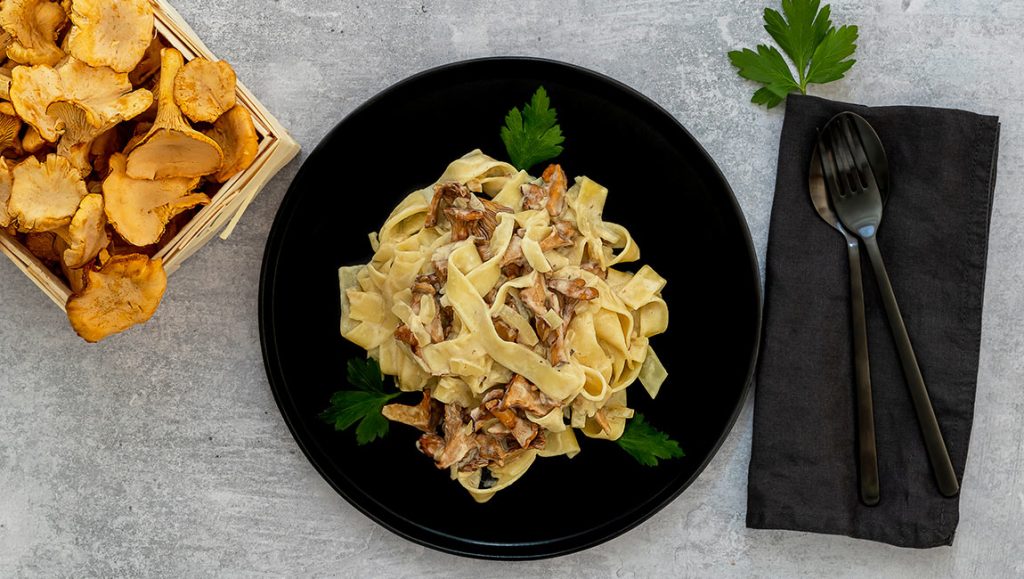
Mini Recipe: Tagliatelle with Chanterelles
Creamy, fragrant and ready in about twenty minutes – this recipe best shows why chanterelles go so well with pasta.
Ingredients:
- 300 g tagliatelle pasta
- 250 g chanterelles
- 30 g butter
- 1 clove of garlic
- 150 ml cooking cream
- a few fresh parsley leaves
- salt and pepper
Method:
- Clean the chanterelles and cut them in half.
- Heat the butter in a pan and toss in finely chopped garlic; as soon as it releases its fragrance, add the mushrooms.
- Sauté them for up to seven minutes, until they soften.
- Pour in the cream, season, and let the sauce simmer briefly over low heat until slightly thickened.
- Transfer the cooked pasta to the pan, mix everything well and garnish with fresh parsley.
For an even richer flavour, stir a spoonful of grated Parmesan or a splash of white wine into the sauce before adding the cream. If you like a more intense aroma, add a pinch of dried black trumpet powder near the end – it pairs beautifully with chanterelles and deepens the sauce.
Chanterelles with Meat and Eggs
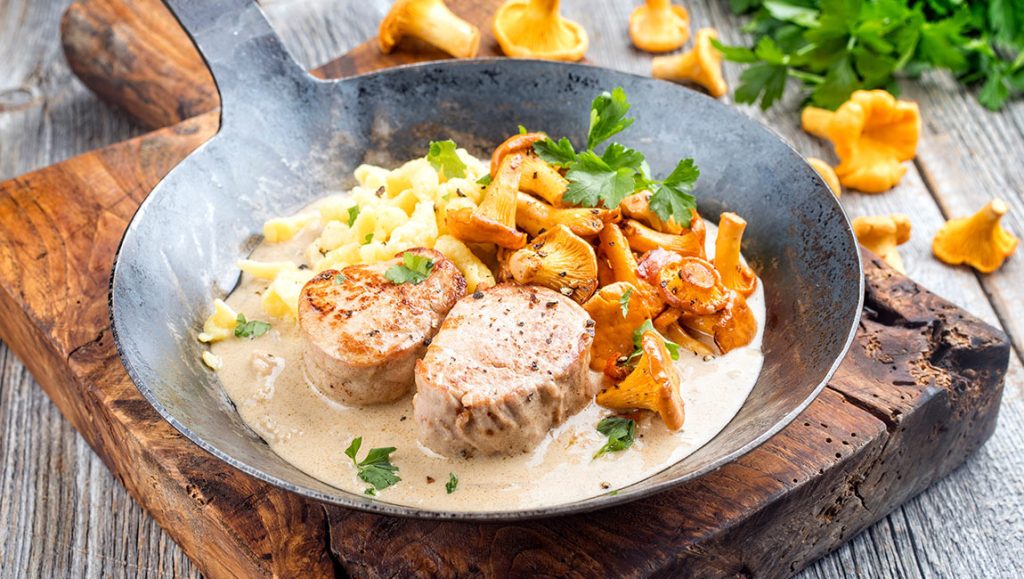
Thanks to their mild taste and lovely golden colour, chanterelles are a perfect side for meat dishes. They go especially well with pork: sauté them briefly in a cream sauce and serve with medallions or a roast, ideally with spätzle or mashed potatoes that soak up the sauce.
For a quick meal, fold them into scrambled eggs or an omelet with a little cream cheese, or serve them on toasted bread as a warm bite. They also work great with chicken, veal and game, where their woodland aroma highlights the flavour of the meat.
Black Trumpets: Sweet and Nutty Tones
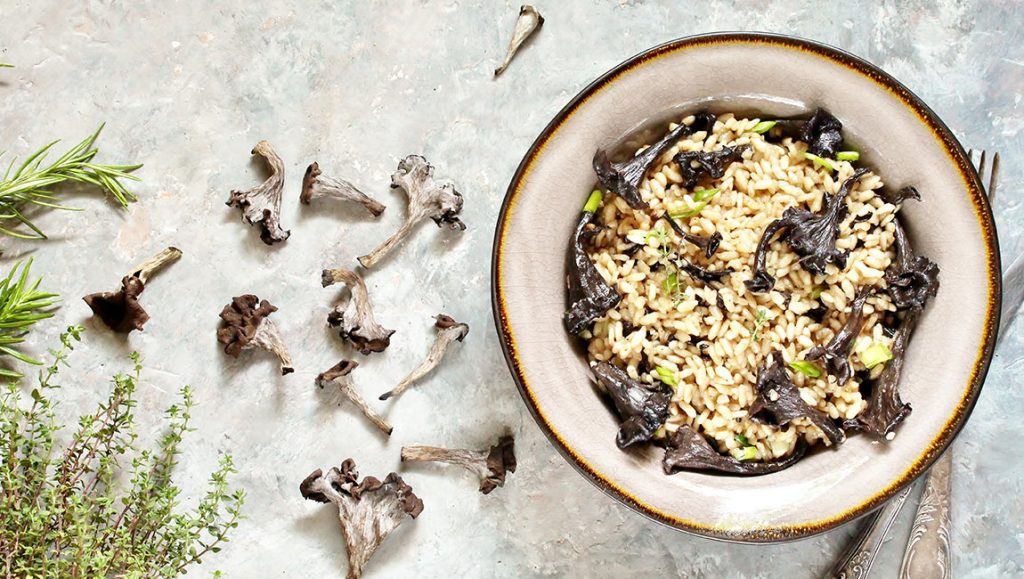
Though modest and dark in appearance, the black trumpet is one of the most prized wild mushrooms for its aroma, which is why cooks sometimes call it the “poor man’s truffle”. A little goes a long way: just a few pieces are enough to give an ordinary dish depth and a more festive character.
The black trumpet belongs to the same botanical family but offers a slightly different experience. Its pleasant earthy tones and mild sweetness give a more complex note to familiar dishes, and they come through especially nicely in risotto, where the creamy rice soaks up their aroma.
Dried and ground into powder, the black trumpet makes an excellent natural seasoning for sauces and clear soups. When you use it fresh, a short sauté in butter or oil is enough for the mushroom to keep a slight bite. Prepared this way it perfectly accompanies cream cheese omelets, and its taste pairs especially well with beef and game.
Quick Ideas for Pairing
If you need quick inspiration, here are a few reliable combinations with wild mushrooms:
- chanterelles + cream + chicken, as a quick creamy sauce
- chanterelles + cream cheese on toasted bread, with fresh herbs
- chanterelles + eggs, in scrambled eggs or an omelet
- chanterelles + pork medallions + spätzle
- black trumpets + Parmesan risotto
- black trumpet powder in a sauce, clear soup or over beef
Tips and Tricks for Cooking Mushrooms
A few small things make the difference between average and excellent mushrooms on the plate:
- Don’t soak them in water – they absorb it and fry poorly; brush them clean instead.
- Fry them in a well-heated pan and in smaller batches so they brown.
- Add salt near the end so the mushrooms don’t release liquid too soon.
- Butter and a sprig of thyme or rosemary bring out their aroma best.
- Use leftovers the next day in risotto, an omelet or a creamy soup.
How to Choose and Store Wild Mushrooms
When buying, choose mushrooms that are firm, dry and pleasantly fresh-smelling, without any slimy, dark or soft spots. Fresh wild mushrooms are best used within a few days, as they lose firmness and aroma over time. If you buy them at a market, look for ones that are dry and springy rather than wet or brittle.
To keep them fresh, store them in the fridge in a paper bag or a breathable container, because in sealed plastic they quickly release moisture and spoil. Don’t wash them until you need them. Extra black trumpets can be dried and kept in a jar – a homemade seasoning that lasts for months and easily enriches sauces, soups and risottos all year round.
With a little care in cleaning and preparation, chanterelles and black trumpets easily turn an everyday meal into something special. Look for fresh wild mushrooms on the shelves of our markets and let good ingredients and the aroma that fills the kitchen do the rest – from a quick weekday pasta to a festive dinner.