

Tête de Moine: The Swiss Cheese Served as a Flower
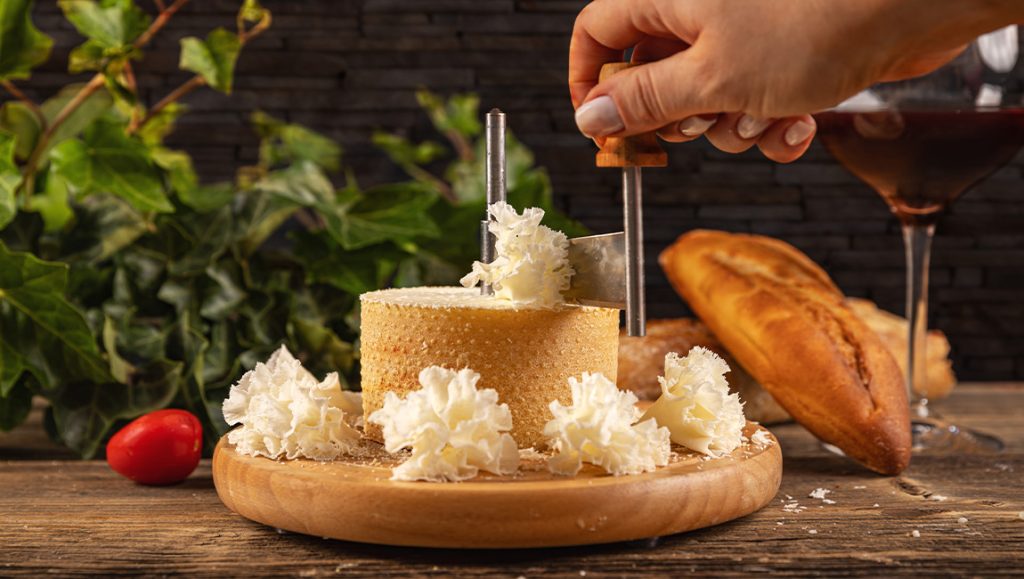
Tête de Moine is a semi-hard Swiss cow’s milk cheese that isn’t sliced with a knife but shaped into thin, airy rosettes using a tool called a girolle. Its lavish, flower-like look draws every eye at the table, while the scraping itself helps the cheese release its aromas. Each ruffled petal has a remarkably creamy texture, turning any serving into something elegant with just a few simple moves.
Although it feels like a cheese for special occasions, Tête de Moine is surprisingly easy to serve once you get the hang of the girolle. Below we look at where it comes from, why it’s shaped into rosettes instead of being sliced, how nutritious it is, how to store it, and what to pair it with.
What Tête de Moine Is and Where It Comes From
Tête de Moine comes from the Swiss canton of Jura, where the monks of Bellelay Abbey first made it more than eight centuries ago. The cheese appears in written records as early as the late 12th century, when the monks used it to pay part of their dues. The name itself, “Tête de Moine,” means “monk’s head” and has been in use since the late 18th century.
Today it carries a protected designation of origin (AOP), meaning it is made in a clearly defined area following set rules, traditionally from full-fat cow’s milk. It’s a semi-hard cheese with a pronounced, gently nutty and slightly piquant aroma, cylindrical in shape, that reveals its full character precisely through those rosettes.
Each cylinder of cheese weighs around 800 grams and ripens for several months, during which it is regularly treated and turned to develop its signature rind and depth of flavour. Longer ageing brings a more intense, piquant aroma, so the taste can vary slightly from piece to piece – and that is part of the charm of artisan cheeses.
The Girolle and Cheese Rosettes: Why It Isn’t Sliced
The secret behind its signature look is a tool called a girolle – a round base with a spike in the middle and a blade that turns across the top of the cheese. The girolle was invented in 1981 and completely changed how this cheese is served. Instead of cutting it, you set the cheese on the spike and, with a gentle turn, scrape off thin shavings that curl into rosettes on their own.
This isn’t only about looks. Scraping greatly increases the surface of the cheese exposed to air, so its aroma and that delicate, almost melt-in-the-mouth character come through fully. The thin petals practically dissolve on the tongue, and the flavour feels more intense than if you had simply cut the same cheese into cubes.
Shaping the rosettes also becomes a little ritual at the table. Guests happily turn the girolle and make their own petal, so the cheese is both a serving and a bit of entertainment. That’s exactly why Tête de Moine so often appears at festive tables, where it charms with looks and taste alike.
Nutritional Value
As a full-fat cow’s milk cheese, Tête de Moine is a concentrated source of protein and calcium, along with a certain amount of fat and salt. A serving of about 28 grams has roughly 110 calories, quality dairy protein and calcium that supports your bones.
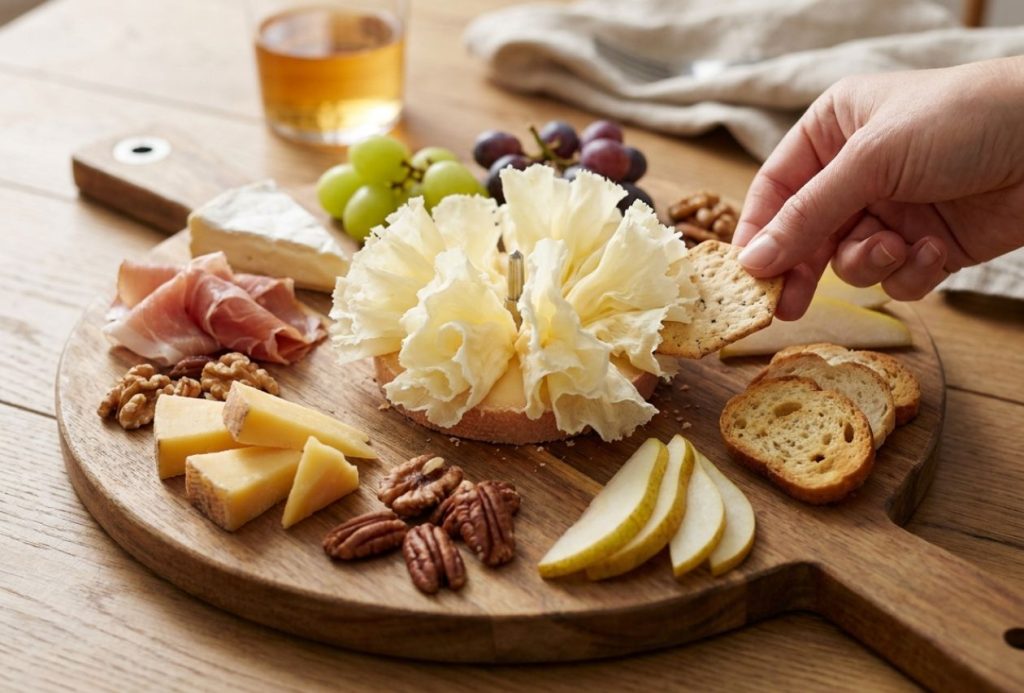
Because the flavour is so pronounced and the rosettes are light and thin, a small amount is usually enough to give a serving something special. It’s best enjoyed as a delicacy in moderation – part of a cheese board or an elegant starter – rather than an everyday sandwich cheese.
- about 110 calories per 28 g
- quality dairy protein
- calcium for bones and teeth
- a pronounced aroma – a little goes a long way
Like other aged semi-hard and hard cheeses, Tête de Moine is naturally very low in lactose, since most of it breaks down during ripening. That’s why many people who avoid fresh dairy still tolerate it well, in moderate amounts of course.
How to Store and Prepare the Rosettes
Keep Tête de Moine in the fridge, wrapped in cheese paper or parchment and then in a lidded container so it can breathe without drying out. Leave the protective band around the cheese on until you use it, as it helps prevent drying. As with other cheeses, take it out of the fridge about fifteen minutes before serving so the aroma can develop.
Shape the rosettes only just before serving, since they look and smell best when freshly scraped. If you don’t have a girolle, you can improvise by scraping the surface into very thin shavings with a sharp knife – it won’t be a perfect rosette, but you’ll get a similar, airy effect.
The Right Company for Cheese Rosettes
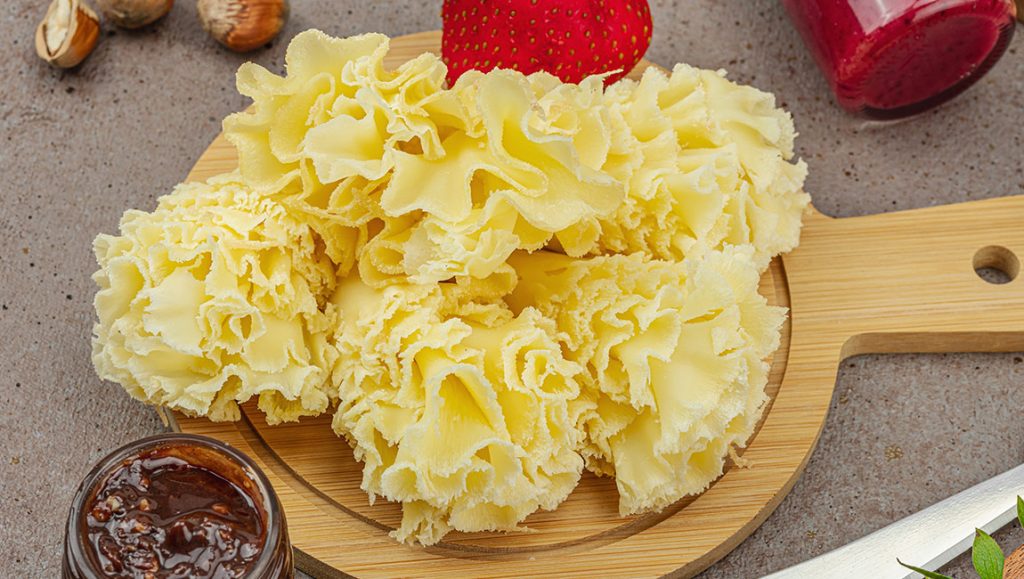
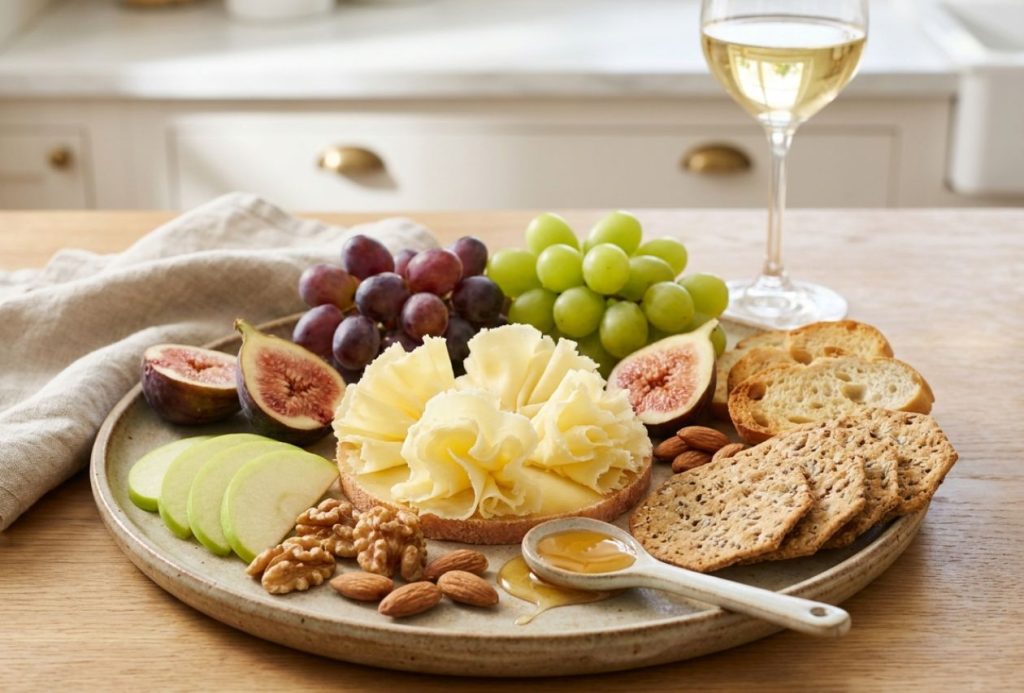
The pronounced dairy and gently nutty notes of this cheese shine best with additions that bring freshness and a mild contrast. Serve it with walnuts, almonds or pecans, whose earthy tones follow the cheese beautifully. Fresh figs, grapes or thin slices of green apple go wonderfully with the petals, adding a pleasant, refreshing note.
Such bites pair naturally with dry white wines, so a glass of Sauvignon Blanc is an excellent choice; a light sparkling wine works just as well for more festive moments. If you’re serving without alcohol, reach for apple or grape juice and sparkling water with lemon, which refresh the palate between bites. For a sweet-and-savoury contrast, add a spoonful of honey or fig jam.
If you need quick inspiration, here are a few reliable combinations:
- rosettes + walnuts/pecans + slices of green apple
- rosettes + fresh figs + a drizzle of honey
- rosettes + grapes + a glass of Sauvignon Blanc
- rosettes + wholegrain crackers + cured meats on a board
- rosettes + pear + a little fig jam
When and How to Serve It
The rosettes bring a playful touch to a wooden board and turn an ordinary serving into a little event. They’re perfect for special occasions – welcoming guests, holiday tables or an aperitif with a glass of wine – but also as a striking detail on a cheese board alongside other cheeses, cured meats and nuts.
When arranging, stand the rosettes upright so they don’t get crushed, and surround them with fruit, nuts and crackers. Since rosettes are best eaten right away, shape them in several batches throughout the gathering, so you always have fresh, fragrant petals on the table.
For a larger cheese board, Tête de Moine pairs nicely with one milder cheese (such as young gouda) and one bolder one (such as an aged hard cheese), so guests can choose to taste. As a rough guide, count on about 30 to 50 grams of cheese per person as part of a bigger spread, or a little more if the cheese is the star of the evening. The rosettes don’t have to stay on the board either – they look lovely on canapés, add a fine note to green salads with walnuts and pear, and can even be laid over warm potatoes or pasta, where the gentle heat melts them slightly.
Little Secrets for Perfect Rosettes
A few small things make the difference between nice and perfect rosettes:
- Scrape off the top rind before your first pass so the rosettes come out clean.
- Turn the girolle with a gentle, even motion – don’t press too hard.
- Shape the rosettes only just before serving so they stay fresh and fragrant.
- Take the cheese out of the fridge about fifteen minutes early so it scrapes and smells better.
- Use any offcuts that aren’t fit for rosettes grated into warm dishes.
With just a few turns of the girolle, Tête de Moine turns an ordinary cheese board into a small spectacle that wins people over before the first bite. Look for it on the shelves of our markets and surprise your guests with a serving that looks as good as it smells.